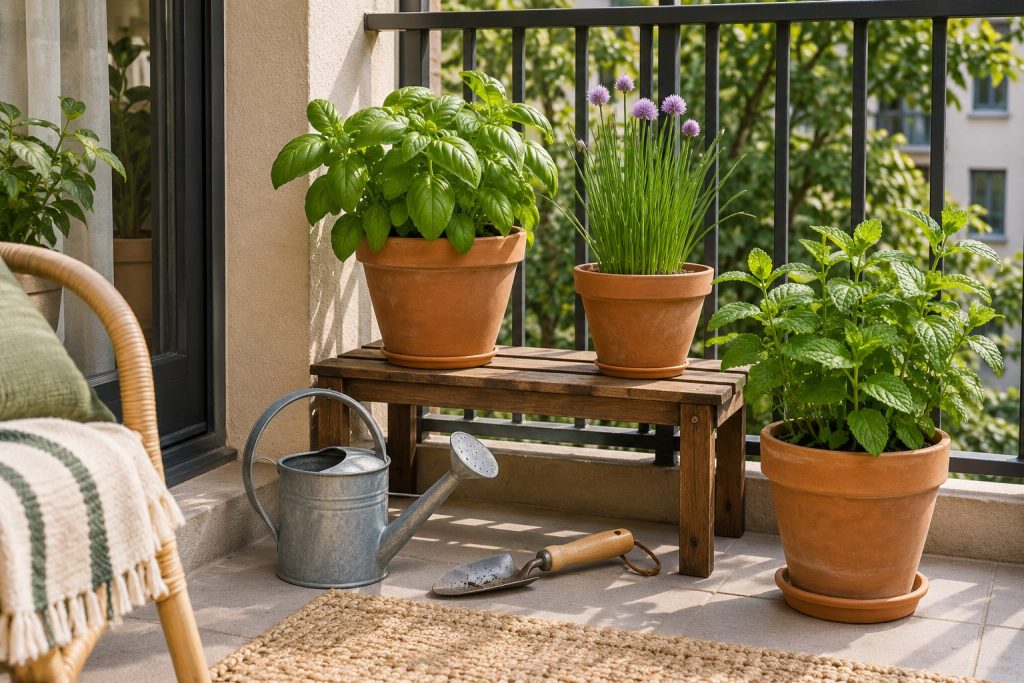
A few pots of herbs can turn a balcony into a useful growing space without requiring a complete garden makeover. The pleasure is in tending something small and occasionally cutting fresh leaves for the kitchen. Begin with a modest experiment rather than a collection of every herb you recognise. Your available light, exposure and willingness to water matter more than an attractive photograph of somebody else's balcony. Choose plants that fit those conditions, give them suitable containers and learn from how they respond. You can add more once the first few pots become familiar to care for.
Look at the balcony before buying plants
Observe where sunlight reaches the space and how that changes during the day. Notice strong wind, reflected heat and areas sheltered by walls. A balcony may contain several different growing conditions within a small area. Consider access to water and where excess water can drain without causing problems below. Keep pots clear of escape routes and check any building rules or load restrictions that apply. Use stable positions inside the balcony rather than balancing containers on an unsuitable edge. Begin with a layout you can reach comfortably for watering, inspection and harvesting.
Choose a few herbs you will use
Think about what you already cook. A plant you recognise and enjoy using gives you a reason to keep checking it. Match the choice to the growing conditions rather than expecting every herb to thrive in the same corner. For example, basil needs warmth, while chives can grow in sun or partial shade. The Royal Horticultural Society provides individual growing guides that help explain those differences. Check local seasonal advice as well, especially if your climate differs from the UK conditions described in many English-language gardening resources. Buying small established plants can simplify the first experiment.
Start with separate containers
Individual pots let you adjust care and move a plant without disturbing its neighbours. Choose containers with drainage holes and enough space for the particular herb to grow. Use an appropriate container-growing compost and follow plant-specific guidance rather than filling pots with whatever soil happens to be available. Keep the holes clear so excess water can escape. Position saucers thoughtfully and avoid leaving roots standing in collected water. You do not need matching decorative pots. A suitable, stable container is more useful than a beautiful one that makes watering difficult or hides a drainage problem.
Plant carefully and label what you have
Before planting, read the supplied label and inspect the root ball gently. Follow guidance for the plant's depth and spacing, then water as appropriate for the conditions and compost. Add a simple label with the herb's name and the planting date. That record helps when several young plants look similar or when you want to understand how the garden developed. Keep mint separate from other herbs because its vigorous growth can crowd neighbours. Starting with a few distinct pots also makes it easier to recognise which plant is responding well and which needs a different position.
Learn watering through observation
There is no single watering timetable that suits every balcony. Pot size, weather, compost and the plant itself all affect how quickly moisture is used. Check the compost and the condition of the plant instead of watering automatically because a particular day has arrived. Look at individual growing advice before allowing a pot to dry extensively or keeping it constantly wet. Wind and warm conditions can change the routine. If you will be away, arrange realistic care rather than assuming a recent watering will cover an unknown period. A small collection is easier to manage while you learn these patterns.
Harvest modestly and watch for change
Use the correct harvesting method for each herb and avoid taking so much that a small plant cannot recover. Check leaves and stems regularly for damage, pests or signs that the growing position is unsuitable. Identify a problem before reaching for a treatment, and follow the directions of any product used around edible plants. Wash harvested herbs before use. Seasonal changes matter too: tender basil should not be treated as though it tolerates frost. Check guidance for the plants you own and decide whether to protect, move or replace them as conditions change through the year.
Build the next season from what you learn
Keep a few notes about successful positions, watering difficulties and the herbs you actually harvested. The most useful next purchase may be another plant you enjoyed using, rather than an unfamiliar variety added for appearance. Replace an unsuitable choice without treating it as proof that you cannot garden. A balcony herb garden is a small, changing project shaped by local conditions and attention. For further plant-specific advice, consult the RHS guides to growing herbs and herbs in containers. Let the first few pots teach you what your space can support before expanding the collection.
Related reading: Small-Space Organisation: Give Everyday Objects a Clear Home.