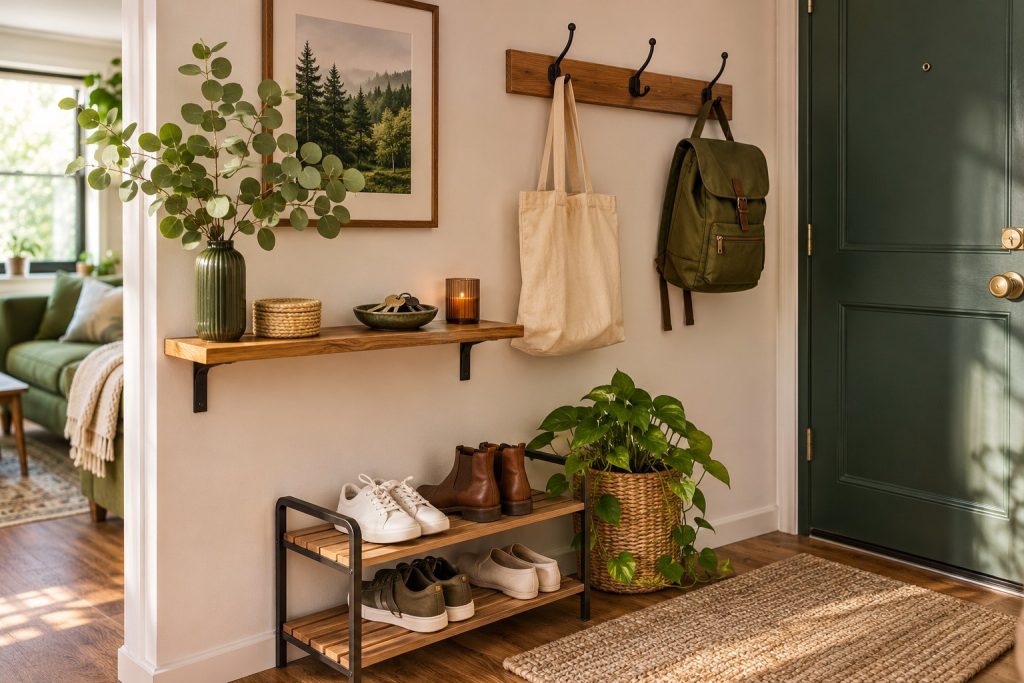
In a small home, the same table may handle meals, paperwork, hobbies and a day's worth of belongings. It is easy to assume that the answer must be more storage. Sometimes the more useful change is deciding where everyday objects belong and making those places easy to use. Organisation works best when it follows real activities: arriving home, making breakfast, getting dressed or starting work. Begin with one recurring difficulty rather than the whole property. A practical home for a few frequently used objects can make a compact space more comfortable without a major purchase or renovation.
Watch where objects naturally collect
For a few days, notice where bags, post, shoes and chargers end up. Those piles contain information about how the space is used. If keys always land near the door, a small tray in that location may work better than a drawer across the room. If paperwork gathers on the dining table, ask whether there is a nearby place for current documents. Do not design the system around an imagined version of your household. Work with the routes people already take and make a useful destination available along those routes whenever practical.
Sort a small area before choosing storage
Choose a drawer, a shelf or a single category of belongings. Separate what you use regularly from things that need repair, belong elsewhere or no longer serve a purpose. Make thoughtful decisions about donation, recycling or disposal, especially for electrical items and confidential paperwork. If other people own some of the objects, involve them rather than making assumptions. The aim is to understand what needs a home. Buying containers first can turn unwanted clutter into neatly packaged clutter, while leaving the real shortage of usable space exactly where it was before.
Store things close to their point of use
Keep everyday items where the associated activity happens, as long as the location is suitable. Put work materials near the place you work and the bags you take out near the exit. Consider heat, moisture, children, pets and product instructions when choosing locations. Frequently used items should be easy to reach without moving several other objects. Occasional-use belongings can occupy less convenient spaces. This arrangement does not have to be visually perfect. It should reduce the number of small actions required to begin a task and make putting things away equally straightforward afterwards.
Give shared surfaces a reset plan
A table that serves several purposes needs an easy transition between them. A shallow project tray, a portable work box or one nearby shelf can hold the materials that must move at mealtimes. Keep the container small enough to handle comfortably and give it a definite parking place. Avoid treating every flat surface as permanent storage. Agree with other household members which areas need to remain available and when. A short reset after an activity often works better than expecting a multifunctional room to look unused throughout the day, especially when several people share it.
Use vertical space with care
Hooks, shelves and the inside of suitable cupboard doors may create useful capacity without taking over the floor. Before fitting anything, check the surface, load limits, installation instructions and any rental restrictions. Keep heavy objects low and do not block doors, ventilation or safe access routes. Tall furniture may need appropriate securing according to its instructions. A simple, well-placed hook can be more helpful than a complicated wall system. Choose additions for a specific collection of objects rather than filling every available section of wall simply because more storage could technically fit there.
Make containers easy to understand
Use broad, recognisable categories and choose containers that suit the objects inside them. A label can help when several people use the same cupboard or when contents are not visible. Leave some room for ordinary movement rather than packing each box so tightly that returning an item becomes a puzzle. Avoid mixing unrelated objects just because they happen to fit together. If a category repeatedly overflows, review the contents and location before buying another container. The useful measure is whether people can find something and return it without needing the system's designer to explain each step.
Test the arrangement in daily life
Live with the new setup for a week or two before expanding it. Notice what stays easy and what drifts back into a pile. Perhaps the tray is too far from the door, a lid adds an unnecessary step or a shared drawer contains too many categories. Make one adjustment at a time. A small-space organisation system should remain understandable during a busy week, not only immediately after tidying. When an area works, use the same practical thinking elsewhere. A home becomes easier to use through a series of modest decisions that match the people and activities already living there.
Related reading: How to Start a Small Balcony Herb Garden.