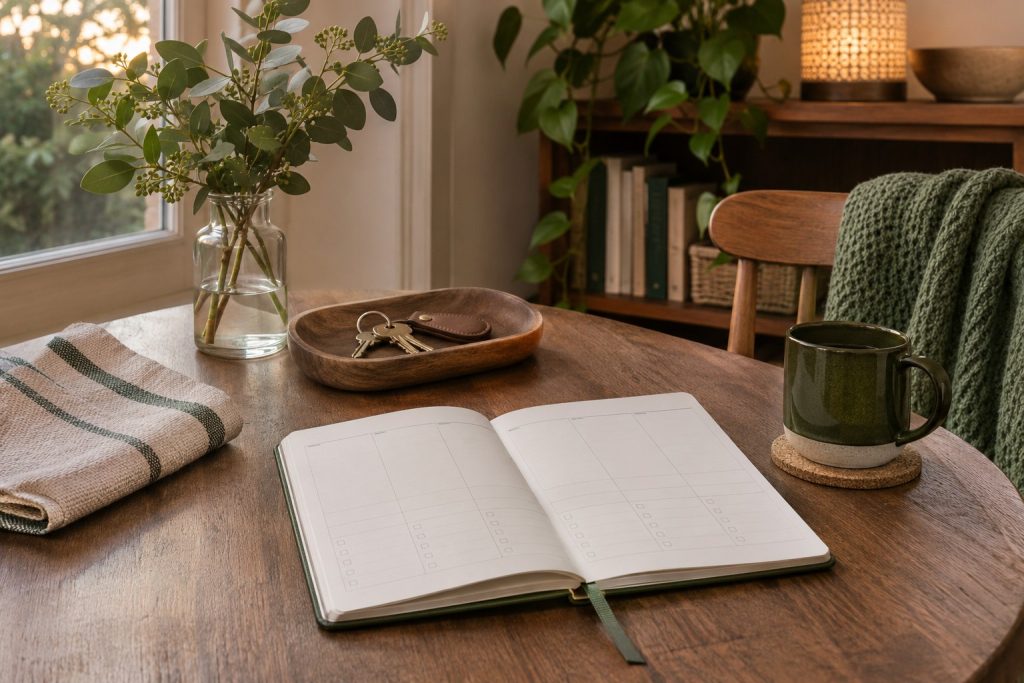
A weekly reset is a small appointment with the practical details of your life. It can help you notice an upcoming commitment, return everyday objects to useful places and decide what needs attention next. It does not require a spotless house, a colour-coded planner or an afternoon devoted to preparation. The most useful version is one you can complete without using all the energy it is meant to protect. Start with a few actions that make the coming days easier, and allow the routine to stay smaller during a busy or difficult week.
Choose a window that suits your household
Sunday evening is only one option. A weekday afternoon, a Saturday morning or two shorter sessions may fit better. Consider when shared spaces are available and when other people can contribute. Set a loose time limit so the reset does not expand into every unfinished household project. If you have fifteen minutes, work within that. If you have longer and want to use it, choose an extra task deliberately. A routine should accommodate your circumstances, including shift work, caring responsibilities and changing energy, rather than assuming every week follows the same pattern.
Clear one place you use every day
Pick a surface or small area that affects daily life: the kitchen table, the place where bags accumulate or the section of a desk needed for work. Return misplaced items to an appropriate home and separate anything requiring a decision. Avoid carrying a pile from one surface to another and calling the job complete. If an object has no home, choose a temporary holding place and note the decision for later. One usable area can be a satisfying result. There is no requirement to continue through every room once you have started.
Check the next few days
Look at your calendar and any reliable source of household commitments. Notice appointments, school information, travel time, expected deliveries or deadlines that require preparation. Ask what needs to happen before each event. A meeting may require a document; an outing may require checking transport arrangements. Add those preparation steps where you will see them. If the week is crowded, decide which optional plans can move. The purpose is to spot a practical collision while there is still time to respond, rather than to schedule every spare moment into a predetermined activity.
Put essentials within easy reach
Think about objects you repeatedly search for when leaving home or beginning work. Keys, glasses, chargers and reusable bags benefit from predictable locations. Refill a useful supply if you already know it is running low, and put required documents with the bag you intend to take. Keep arrangements simple enough for everyone who uses the space to understand. An attractive container is optional; a clear location matters more. Avoid buying organisers before you know the problem. Sometimes moving an existing basket closer to the point of use solves the difficulty perfectly well.
Make a realistic food and household check
Look at what is already available before planning additional shopping. Identify a few meals that fit the coming schedule and note missing ingredients. You do not need to prepare an entire week's food to make this useful. Check dates and storage instructions on products, and follow appropriate food-safety guidance rather than guessing how long prepared items will keep. Add household essentials to the same shopping list where practical. Keep the plan flexible enough for changing appetites, available time and other people. A simple list of possibilities can be more useful than a rigid menu nobody wants to follow.
Choose fewer priorities than you could list
Write down the tasks occupying your attention, then choose a small number that need action soon. Separate a genuine commitment from a useful idea or an improvement that can wait. For a large task, identify the first manageable step instead of copying its intimidating title onto another list. If responsibilities are shared, agree who will do what rather than silently assigning work. Leave room for ordinary rest and for events you cannot predict. Planning becomes less useful when it creates a second full schedule on top of the one you already have.
Stop with a clear enough starting point
Finish by looking at what is now easier. You may have a usable table, a short shopping list and the materials ready for Monday's appointment. That is a completed reset even if other rooms still look lived in. Put away the planning tools and leave any larger project for a separate decision. Over time, keep the steps that reduce friction and drop the ones that feel ceremonial. A weekly reset works best as practical support. It gives the next few days a clearer beginning without asking you to make the whole week predictable or perfect.
Related reading: How to Build a Creative Habit Without Turning It into Another Job.